-
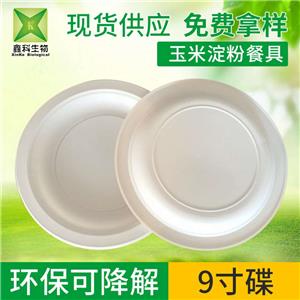
2018-09-12150碟子
-
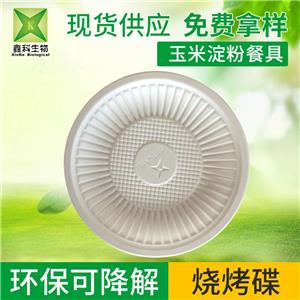
2018-09-13一次性環保餐具-碟(dié)子
-
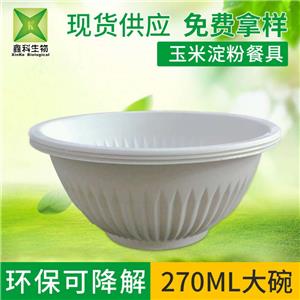
2018-09-14一次(cì)性可降解餐具(jù)-270ml碗
-
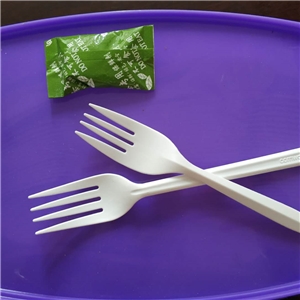
2018-09-14一次性餐具-叉(chā)子
-
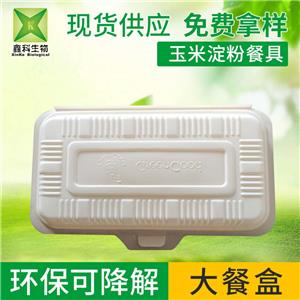
2018-09-14環保餐盒
用食品(pǐn)做的餐具不僅可降解也可加盟!

關於環保一次性餐(cān)具供用可以(yǐ)做一個簡單的計算,一家中型飯(fàn)店每天餐具的平均(jun1)使用量約為100套左右,供應商每(měi)套的產品差價為0.3元以(yǐ)上,每天供(gòng)應一家飯店的差價利潤就(jiù)在30元(yuán)以上,而隻需十(shí)家這樣(yàng)的飯店(diàn)就是300元,已經比(bǐ)普通上班族(zú)掙得多了,一個區域的大中型飯店、大(dà)排檔、酒店賓館等餐飲企業成千上萬,做餐具供應商無疑有著讓人欣慰的收入。
A simple calculation can be made on the supply of environment-friendly disposable tableware. The average consumption of tableware in a medium-sized hotel is about 100 sets per day. The price difference of each set of products provided by the supplier is more than 0.3 yuan. The profit difference of one hotel per day is more than 30 yuan, while only ten such hotels are 300 yuan, which has earned more than ordinary office workers, There is no doubt that large and medium-sized hotels, restaurants and other large and medium-sized enterprises have an income of thousands of people.
其實(shí)環保一次性餐具供應的收益可以參考傳統餐具,因為它的差價利潤和銷售渠道跟餐具沒有太大差異,而(ér)早期的餐具供應商同樣催生了大量的成功者。
In fact, the benefits of environmental friendly disposable tableware supply can refer to traditional sterilized tableware, because its price difference profit and sales channel are not much different from sterilized tableware, and early sterilized tableware suppliers also gave birth to a large number of winners.
環(huán)保一次性(xìng)餐具還有普通餐具所(suǒ)不具(jù)備的回收利潤,通過回收後返還廠家,回收時不用考慮產品是否破碎等問題(tí),按照克重每套餐具也有0.1元以上的利潤(rùn)空間,所以,做餐具供應商通(tōng)常無需擔心掙錢的問題,選擇供應質量合格(gé)、有食品衛(wèi)生檢驗認(rèn)證的產品是基礎,通過(guò)廠家指導開拓市場是工作。
Environmental friendly disposable tableware also has the recycling profit that ordinary tableware does not have. After recycling, it will be returned to the manufacturer without considering whether the product is broken or not. According to the gram weight, each set of tableware also has a profit space of more than 0.1 yuan. Therefore, tableware suppliers usually do not need to worry about making money. Choosing products with qualified quality and food hygiene inspection certification is the basis, Developing the market through the guidance of manufacturers is the focus of work.
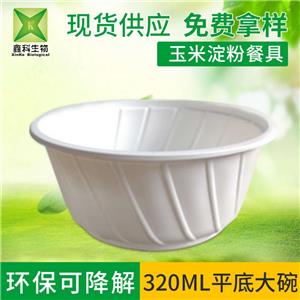
天然材料,包(bāo)括(kuò)紙漿、秸稈(gǎn)以及澱粉等材料,紙杯大家用的很(hěn)多,這裏不(bú)需要多(duō)做介(jiè)紹了,而通過添加劑的作用,將澱(diàn)粉(包括(kuò)玉米、紅薯、木薯、土豆等)和(hé)植物纖維(主要是玉米(mǐ)等秸稈纖維)加工而成的(de)餐具俗稱澱粉餐具,這種(zhǒng)餐具使用的添加劑也可降解,在微生物的作用下,將這些物品分解(jiě)為葡(pú)萄糖,進而轉化為CO2和水,從而起到(dào)保護環境的效果(guǒ),不過這種餐具的缺點也比較明顯,就是容易黴變,防水性能也需要再提升,因為原材料含有大(dà)量糧(liáng)食作物,生產成本也很高。
Natural materials, including pulp, straw, starch and other materials, paper cups are widely used by everyone. There is no need to introduce them here. Through the role of additives, tableware made of starch (including corn, sweet potato, cassava, potato, etc.) and plant fiber (mainly corn and other straw fibers) is commonly known as starch tableware. The additives used in this tableware can also be degraded, Under the action of microorganisms, these items are first decomposed into glucose and then converted into CO2 and water, so as to protect the environment. However, the disadvantages of this tableware are also obvious, that is, it is easy to mildew, and the waterproof performance also needs to be improved, because the raw materials contain a large amount of grain crops, and the production cost is also very high.
- 上一個: 一次性玉米澱粉環保餐具的真假辨認方法
- 下一個: 可(kě)降解一次性環保餐具流程介紹